The short answer
A drone roof inspection is the quickest, least disruptive way to see the condition of a roof: slipped or missing slates, damaged ridge tiles, flashing, gutters and chimneys, all photographed without anyone climbing. Scaffolding is still needed when hands-on testing or repair work has to happen. For most owners the drone survey comes first and tells you whether scaffolding is worth paying for.
What a drone can see
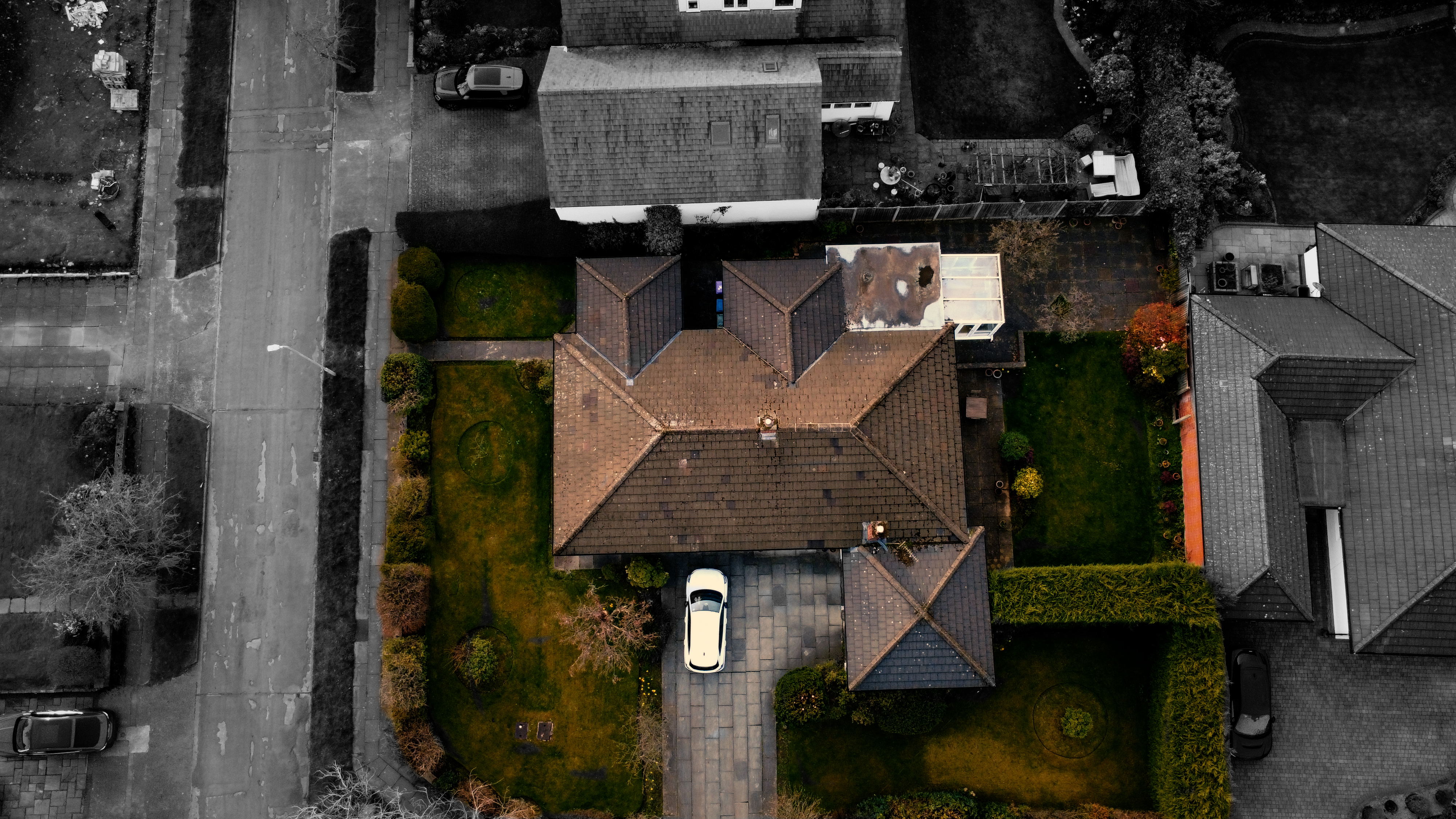
A drone flying over and around a roof captures high-resolution close-up stills of every slope, valley, chimney stack and gutter run. Defects such as cracked or slipped slates, lifted flashing, blocked gutters, vegetation and damaged pointing on chimneys are usually clear in the images.
Because the aircraft can reach any angle, it also shows areas that are awkward even from scaffolding, such as the far side of a chimney, a valley between two roofs or the top of a tall gable.
What a drone cannot do
A drone cannot lift a slate, test timber for rot, check a membrane underneath the covering or carry out a repair. It records what is visible from outside. If the images show a problem, a roofer will still need safe access to fix it, which may mean a ladder, a tower or scaffolding.
Safety and disruption
Working at height is one of the leading causes of serious workplace injury in the UK, which is why avoiding it for a simple look is sensible. A drone inspection keeps everyone on the ground, needs no fixings on the building and leaves no poles in the garden or across the pavement.
Scaffolding needs erecting and striking, sometimes a licence from the council if it sits on the highway, and it stays up for days or weeks. For a survey that only needs photographs, that is a lot of disruption for a look.
When to use each
Choose a drone survey for insurance evidence after a storm, a pre-purchase check, routine maintenance planning, roofs on schools, churches and commercial buildings, and solar feasibility. Choose scaffolding when repair work is already confirmed and needs safe access for several days.
Many property managers use both in sequence: the drone finds and documents the problem, then scaffolding goes up only where it is genuinely needed. That usually shrinks the scaffold and the bill.
What you receive
Liverpool Visuals supplies drone roof surveys as a photo report showing the areas of concern, flown under a current CAA Operational Authorisation with public liability insurance. Flights need dry weather and light wind, so the date moves if conditions are unsafe. Send the address and a note of any known problem to get a quote.
Preparing for a drone roof survey
Let the pilot know the address, the type of building and anything you have already noticed, such as a damp patch inside, a slipped tile seen from the garden or a leak after heavy rain. That helps target the close-up shots on the areas that matter. If the building is a church, school or commercial unit, agree a time when the grounds are quiet and let the site manager know a flight is planned.
Neighbours sometimes ask what is happening, so a quick word in advance avoids concern. The pilot keeps the aircraft over your property and public land wherever possible. After the flight, review the report with your roofer or surveyor: it gives them a clear picture before they quote, so repair estimates are based on evidence rather than guesswork from the ground.
Frequently asked questions
- Can a drone replace a roofer's inspection?
- It replaces the need to climb for a visual check, but a roofer still needs access to lift slates, test timber or carry out repairs.
- Is a drone roof survey useful for insurance claims?
- Yes. Clear, dated photographs of storm damage are useful evidence when making a claim.
- Does the drone need to land on the roof?
- No. Everything is photographed from the air and nobody goes on the roof.
- What weather is needed for a drone roof inspection?
- Dry conditions and light wind. Flights are rescheduled if it is unsafe to fly.